
Roll the credits
If you are interested in the people behind Symbulator, here's who made it and who helped, plus some acknowledgements. And some glowing reviews received over the decades.
Last updated 2026-09-06
Who made Symbulator
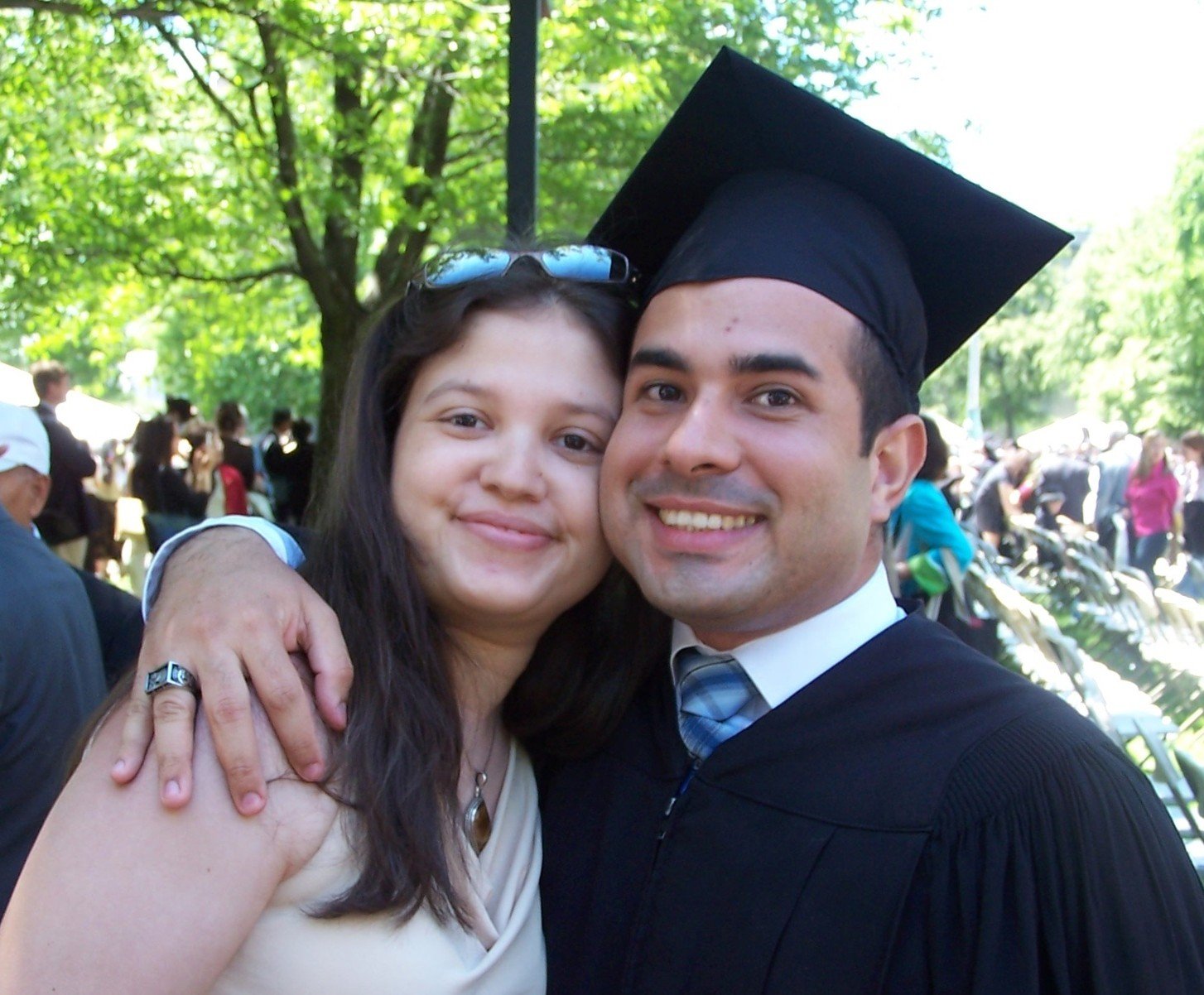
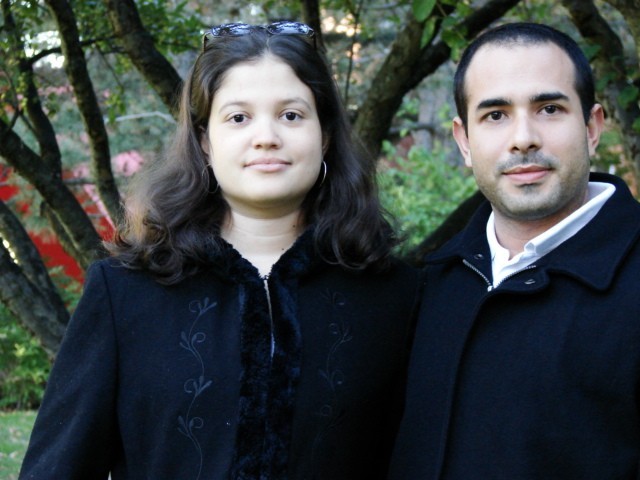
Symbulator and its documentation, in all its versions up to this date, have been made by me, Roberto Perez-Franco. I started coding it as an engineering student at the Technological University of Panama (Universidad Tecnológica de Panamá) in Azuero, and the timeline below has the dates.




A timeline
| Date | Event |
|---|---|
| 30 March 1999 | The first line of code, at the Technological University of Panama in Azuero. |
| 2 April 1999 | Version 0.92, the first public release, goes onto the Internet. |
| 29 May 1999 | Version 0.994 — the equivalent of version 1. |
| 19 August 1999 | Version 2, presented in person for the first time, at UTP Azuero. |
| October 1999 | The Elect SCS plug-in. The program is still called SCS. |
| November 1999 | The paper is written. |
| Late 1999 or early 2000 | Version 3. |
| 14 May 2000 | The Power Tools plug-in. The program is now called Symbulator. |
| October 2000 | First place, IEEE Region 9 Student Paper Competition. |
| December 2000 | The paper is published in Panama, in the bulletin of the IEEE section. |
| 9 January 2001 | Version 4. |
| 30 March 2001 | Version 5, called Q. |
| 9 July 2001 | The thesis is defended, and graded 100 out of 100. |
| September 2001 | The paper is published in Barcelona, in the magazine of the IEEE student branch. |
| June 2013 | Version 6, written at MIT. |
| July 2023 | Versions 7 and 8, written in Melbourne. |
| 13 August 2026 | The symbulator package goes onto PyPI. |
| 28 August 2026 | Version 9, a public beta. |
| 1 October 2026 | Versions 9 and 8 leave beta. |
What Symbulator did for me
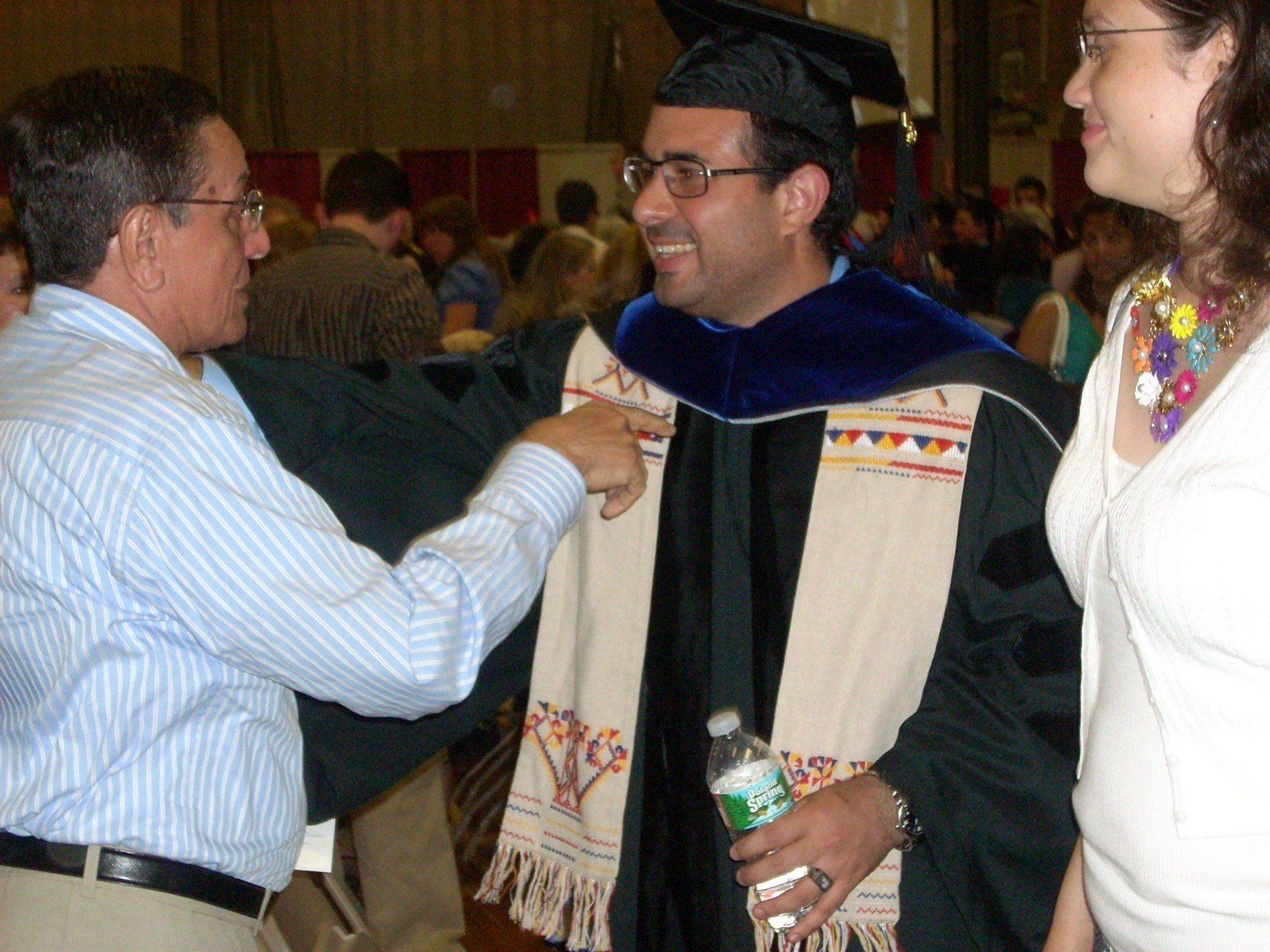
I've never made any money from Symbulator: it has always been and will remain free of charge. But I have benefited from Symbulator in other ways. Thanks in large part to Symbulator, I landed my first job, received a Distinguished Alum award from UTP in 2008 and an Outstanding Young Person (TYOP) award from the Panamanian chapter of Junior Chamber International (JCI), and won a Fulbright Scholarship that took me to a Master of Engineering and later a PhD in Engineering Systems at the Massachusetts Institute of Technology. MIT then hired me, and I lived in Boston for almost twelve years. I now live in Melbourne, Australia. You can say that writing Symbulator changed my life. Beyond my lifetime, Symbulator may preserve a part of my mind as it solves circuits for new generations, the same way a composer lives in the tunes or a writer in the words they conceived.
Dedication
Two people made Symbulator possible, with their love and support.
The first is my wife Monica, who had the patience to live with a cyborg for all the years my mind was focused on coding and documenting. Mi reina, my attention was elsewhere, but my heart was always with you.
The second is my late father Tito, who invested time and money in my education and bought me every gadget and every book I needed or wanted for my studies, with a blind faith that one day something good would come of it. I'm happy to know that I made you proud, Dad, and I miss you every day.
How to reach me
If you liked Symbulator, let me know. My email is my given name, then my last name with a hyphen, as a dot-com address, like so: rxxxxxx@pxxxx-fxxxxx.cxx
Acknowledgements
Human collaborators
Over the past decades, many people have made Symbulator better through their suggestions and corrections, on both the software and the documentation. Many were complete strangers at first and became dear friends through our exchanges. Others were dear friends that became collaborators.
Versions 1 through 6 received feedback and suggestions from José Vega (Panama), Tim Hutcheson (USA), Lars Frederiksen (Denmark), Joe Riel (USA), Arne Harstad (Norway), Erwin Baert (Belgium), Charles 'Chuck' Ware (USA), Doug Burkett (USA), Reinhard Willinski (Germany), Kamil Malinski (Austria), Jake Adams (USA), Daniele Martini (Italy), Rozgonyi Szabolcs (Hungary), Michael Rans (UK), Alex Astashyn (Russia), Al Charpentier (USA), Nevin McChesney (USA), Ivan Oro Yu (Panama), Pepe Iborra (Spain), and Dave Conklin (USA). Versions 7 and 8 received feedback and suggestions from Carlos Perez Ortega (Chile) and Qifan Wang (China).
Version 9 benefited from feedback and excellent suggestions from my dear old friend Antony García (Panama), who is not only one hell of an engineer and a consummate circuit theorist, but who also taught the same Circuits class at UTP as Prof. Eliane Boulet for many years. I met Antony in May 2013, while he was a student at UTP Azuero in the same major that I had completed more than a dozen years earlier. I was immediately struck by his brilliance, and we became friends. In August 2026, I shared an early version of Symbulator 9 with Antony while he was a PhD candidate in the ECE Department at WPI (MA, USA). Antony generously provided me with a series of fantastic recommendations — from his vantage point as both a student and a teacher of circuit theory — regarding features he would like to see in Symbulator. I worked with Claude over a few weeks in September to turn them into reality.
My thanks to all of them. I truly am in their debt.
AI collaborator
I also want to acknowledge that porting Symbulator to Python/SymPy, creating its interface and websites and updating its documentation, would not have been possible without the coding prowess of Anthropic's artificial intelligence assistant. Claude allowed me to do in two weeks something that I was unable to find the time to do in two decades: to port Symbulator to Python.
I believe there is a right way to deploy this technology, and — after working on Symbulator 9 with Claude — I am now convinced that AI will revolutionise the way we work. We just need to do it the right way.
Software I relied on
Symbulator 9 runs on Python and is powered by the algebraic capabilities of SymPy and the numerical prowess of NumPy. I am thankful to the creators of such wonderful open-source software, and to the maintainers who keep their development going. I am proud to honour the open-source community by making Symbulator free and open-source software, from 2026.
Throughout its development, Symbulator 9's answers were checked against ahkab, an independent circuit simulator written in Python by Giuseppe Venturini. Every circuit that Symbulator's SPICE translator exports is solved a second time by ahkab, and the two must agree before a release goes out — a habit that has caught more than one convention I had taken for granted. None of ahkab's code is part of Symbulator, and it is not needed to run it: it is a second opinion, kept at arm's length, and a valuable one. My thanks to Giuseppe for building such a tool and sharing it freely.
Problem credits
To make this book useful to actual students, the problems were chosen from widely used textbooks on electric circuit analysis, and their circuit diagrams are reproduced here as they appear in the source.
| Code | Textbook |
|---|---|
| AS2 | Fundamentals of Electric Circuits (2nd ed.), Charles K. Alexander and Matthew N. O. Sadiku, McGraw-Hill, 2004 |
| AS5 | Fundamentals of Electric Circuits (5th ed.), Alexander and Sadiku, McGraw-Hill, 2013 |
| AS7 | Fundamentals of Electric Circuits (7th international ed.), Alexander and Sadiku, McGraw-Hill, 2020 |
| B11 | Introductory Circuit Analysis (11th ed.), Robert L. Boylestad, Pearson – Prentice Hall, 2007 |
| Bo2 | Elementary Linear Circuit Analysis (2nd ed.), Leonard S. Bobrow, Oxford, 1987 |
| HK5 | Engineering Circuit Analysis (5th ed.), William H. Hayt Jr. and Jack E. Kemmerly, McGraw-Hill, 1993 |
| NR9 | Electric Circuits (9th ed.), James W. Nilsson and Susan A. Riedel, Prentice Hall, 2011 |
| NR11 | Electric Circuits (11th ed.), Nilsson and Riedel, Pearson, 2020 |
| NR12 | Electric Circuits (12th ed.), Nilsson and Riedel, Pearson, 2023 |
| RM3 | Circuit Analysis: Theory and Practice (3rd ed.), Allan H. Robbins and Wilhelm C. Miller, Thomson – Delmar Learning, 2004 |
| TR5 | The Analysis and Design of Linear Circuits (5th ed.), Roland E. Thomas and Albert J. Rosa, Wiley, 2006 |
For the purpose of teaching students how to use Symbulator, these diagrams are reproduced under the principle of fair use. No copyright infringement is intended.
Praise received
Over the past quarter of a century, the words of encouragement I received from users of Symbulator were my incentive to keep working on it. Here is a little of that precious collection.
The masterpiece of TI-89 programming.
— Alex Astashyn, EE+CoE+CoS major, Polytechnic University, Brooklyn, New York, USA
Symbulator is and always will be the best program for TI-89/92/V200.
— Charles Ware, EE major, Columbus, Ohio, USA
Roberto, your program Symbulator is by itself a reason to buy the calc. It's a masterpiece of programming.
— Pepe Iborra, Telecommunications, Spain
The program is really a masterpiece. It gives you everything you need, very accurate, very fast. It's really what every Electrical Engineer dreams of. It's so easy to use and it does everything! DC, AC, Transient analysis, Thévenin, Bode plots… everything! I'm really amazed.
— Nikolaos Trichakis, EE major, Aristotle University of Thessaloniki, Greece
I wish I had it while going through school.
— Joe Riel, BSEE, creator of Syrup (a symbolic circuit simulator for Maple V), University of California, Irvine, USA
Congratulations for your program: it's simply fantastic. Symbulator is worth the cost of a TI-89!
— Pier Giorgio Raponi, engineering student, Pisa, Italy
You've made an excellent program. Symbulator is really the best circuit simulator ever made for a calculator.
— Rui Sebastião, EE major, University of Coimbra, Portugal
Symbulator is probably the most useful program ever made for a TI calculator. I am an electronics student and even paid for the EE*Pro software, yet I find myself using Symbulator more because it is much better at what it does.
— Josh Cunningham, electronics major
Symbulator, by far, has been the best tool for EE I have come across yet. […] It is truly an impressive piece of work. You should be proud. It certainly is helping me to focus on my studying of EE instead of trying to remember all the math.
— Jim Wachtel, EE, Process Control & Electrical Co., St. Louis, Missouri, USA
Licence
From June 2013, Symbulator was offered under a Creative Commons BY-NC-SA licence. Since 2026 it is open source under the MIT licence, which supersedes it. If you want to port it to another platform, you are free to do so, provided the copyright notice and the attribution of authorship travel with it.